
The Sites We've Built, and What They Did for Our Clients
Real sites, real results, told plainly.
Each case study follows the same format: what the client needed, what we did, what happened, and what it could mean for a business like yours. Where we have real numbers, we share them.
Sites We Built That Are Still Running
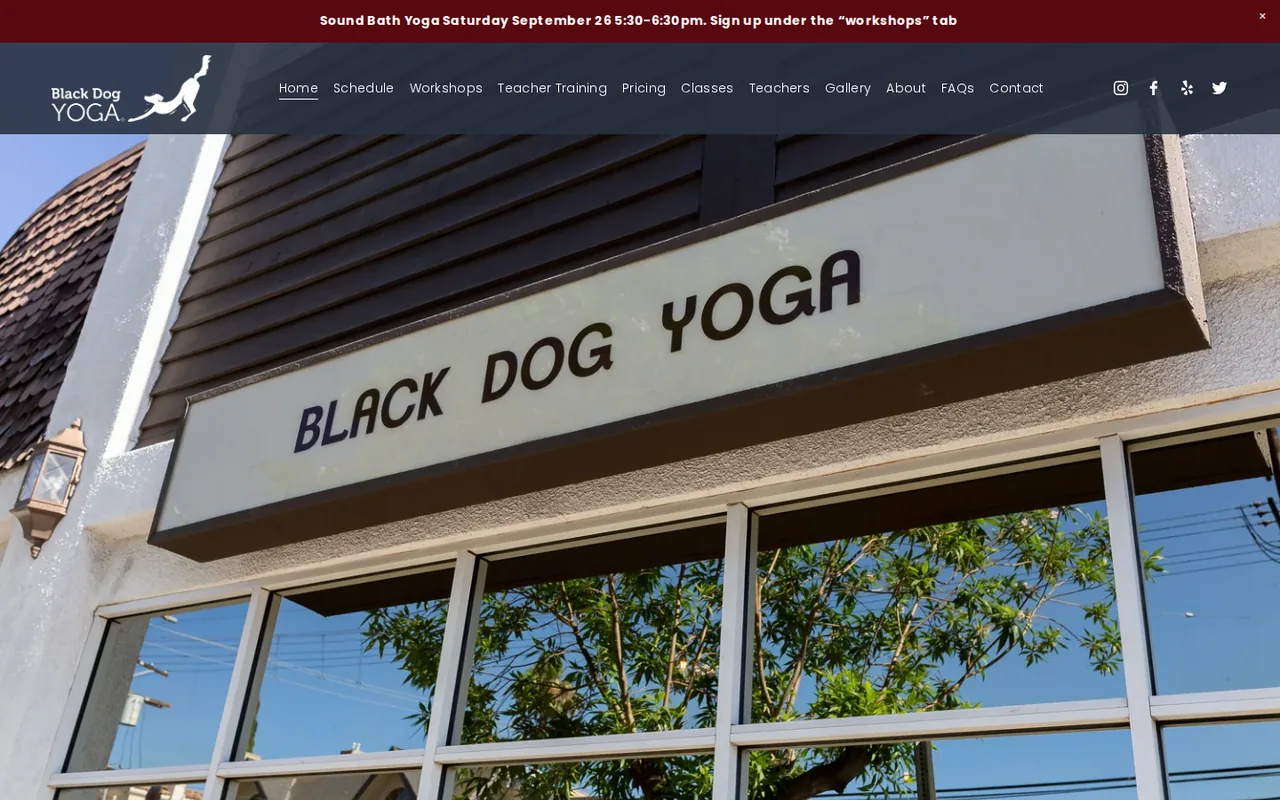
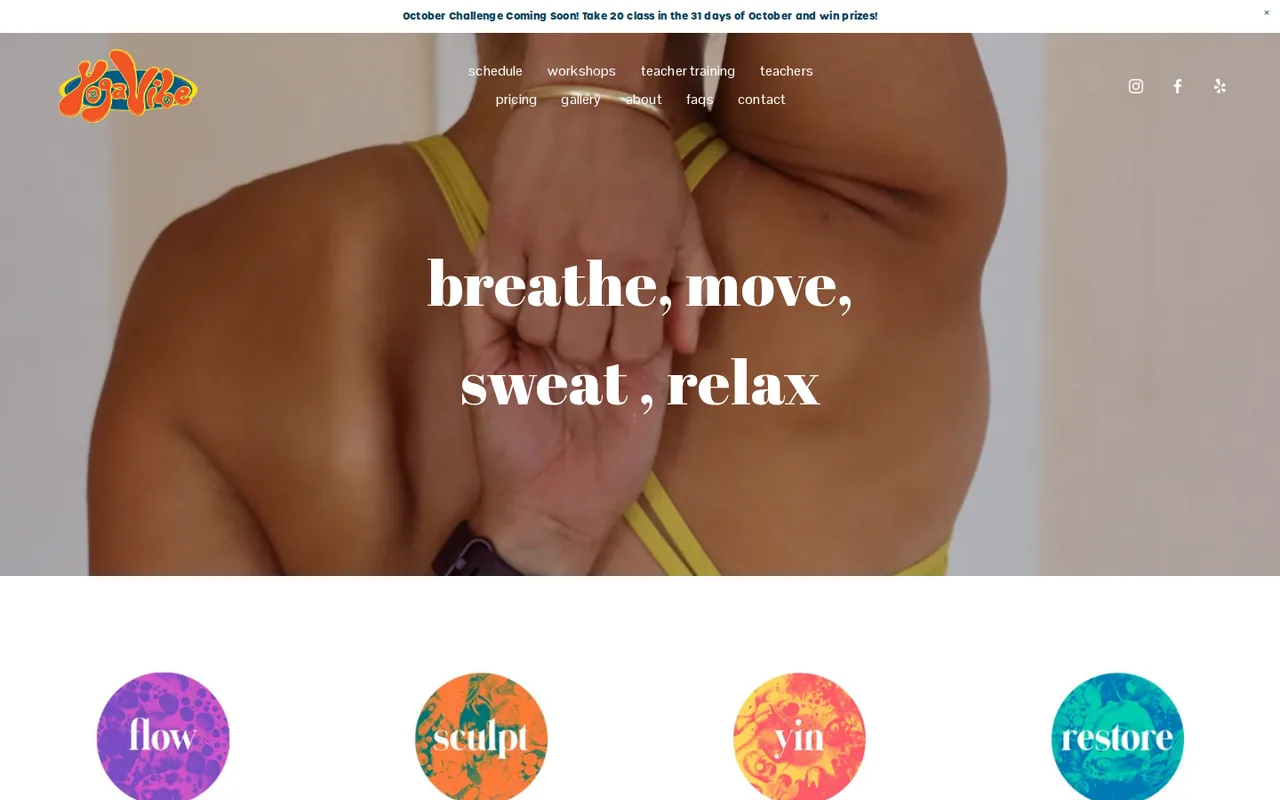
You're welcome to open any of them on your phone — the site itself is the best evidence. Screenshots show each site as we handed it over; every owner has run and updated their own site since, which is exactly what we hope for.
What Clients Say
Written by the owners themselves, 2014–2026. Reproduced word for word.
“Roger built both of our yoga studio websites and continues to offer updates whenever needed. He is easy to work with, quick to respond to requests, and offers great input and fresh ideas. Highly recommend!”
“I've worked with several web developers in the past but have never met someone with Roger's talent and vision. When I first met Roger, I gave him very rough ideas and hopes for my ecommerce websites. Roger presented me with 3 or 4 layouts, all looked great, but one caught my eye more than the others. I am not tech savvy but know what I like when I see it. Roger clearly understood what I was looking for and presented me with revisions that, each time, got us closer and closer to what we ended up going with. In addition, Roger has been very responsive and timely when I've needed updates or site changes and additions. I can't recommend Roger enough. If you're searching for a web developer, you can stop searching. You've found him. 5 out of 5 stars!”
“I highly recommend Roger Yau to anyone looking for help with website design, maintenance, and social media assistance. He is talented and creative and he has been a great help to me in bringing my website up to date and increasing my traffic flow. He responds quickly when I contact him and he gets the job done efficiently. I especially appreciate his patience with my lack of technical knowledge as he guides me and teaches me how to navigate the internet.”
Update, October 2026: “I enjoyed working with Roger several years ago. He redesigned my blog at carbwarscookbooks.com and added a lot of useful features. He is technically talented and creative, and he did a good job for me. I recommend him.”
“For over two years, I have worked with Roger Yau regarding our websites. He has done a very good job of developing, updating and maintaining two sites for us. Roger thinks, analyzes problems and shares his thoughts well. Also he continues to stay aware of the latest technologies and updates his skills. I highly recommend him.”
“On a weekly basis, I have been working with Mr. Yau over the year. The ideas that Mr. Yau have suggested have been some of the main contributions to my company's success. Working with Mr. Roger Yau has proven to be the best idea I have made for my company.”
“Roger is a hardworking, efficient and well-rounded designer that can helped us from web design to styling and fashion needs. He has a pleasant personality and never says No to a job too small or complicated. We worked together on various projects over the year and I highly recommend Roger. Thank you.”
Two of these six owners also appear in the case studies below.
Worked with us? Leave a Google review → No Google account? Email us your review and we'll post it here.
Five Case Studies
Two long-running client stores, then three earlier projects — each with what we built, what happened, and what we learned.
Online store · shop till · bookkeeping, connected
On Track & Field — From Phone Orders to One Connected Store
The Starting Point
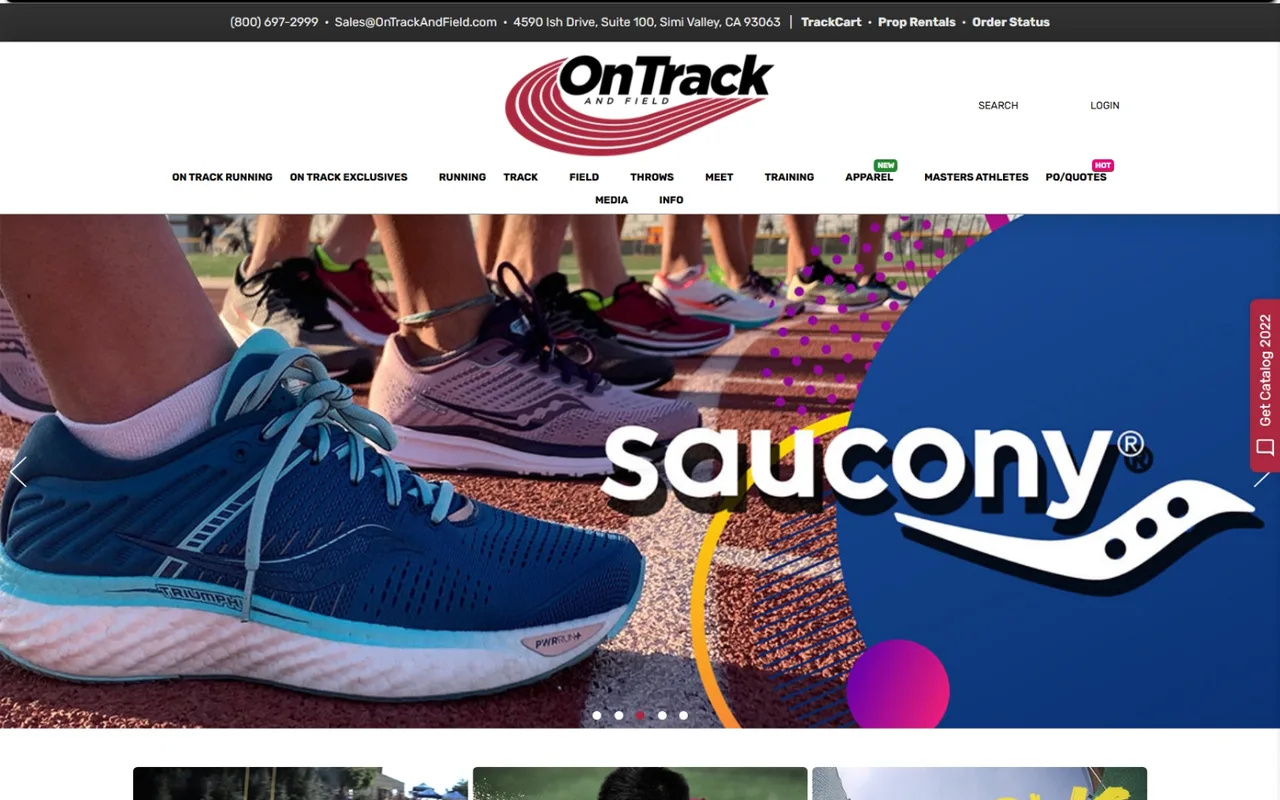
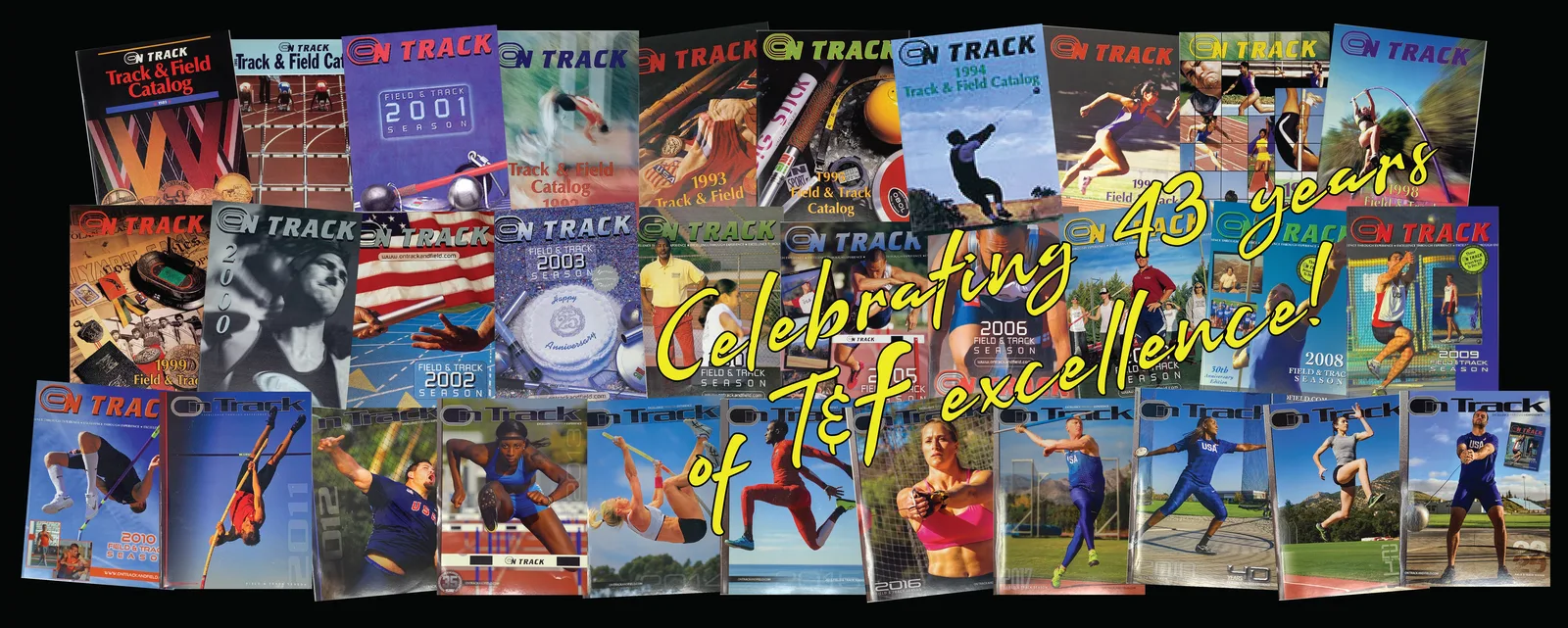
On Track & Field has supplied schools, clubs and athletes with track and field equipment for over forty years, and its customers are loyal. When the business changed hands and moved from Burbank to Simi Valley, the owner had a clear goal: keep everything customers loved — the catalog, the expert sales reps, the personal service — and give them a modern way to order online. The website was still a catalog to browse before phoning a rep; every order, stock count and ledger entry was a separate job. With half the warehouse becoming a running-shoe storefront, the timing was right to connect it all.
What We Did
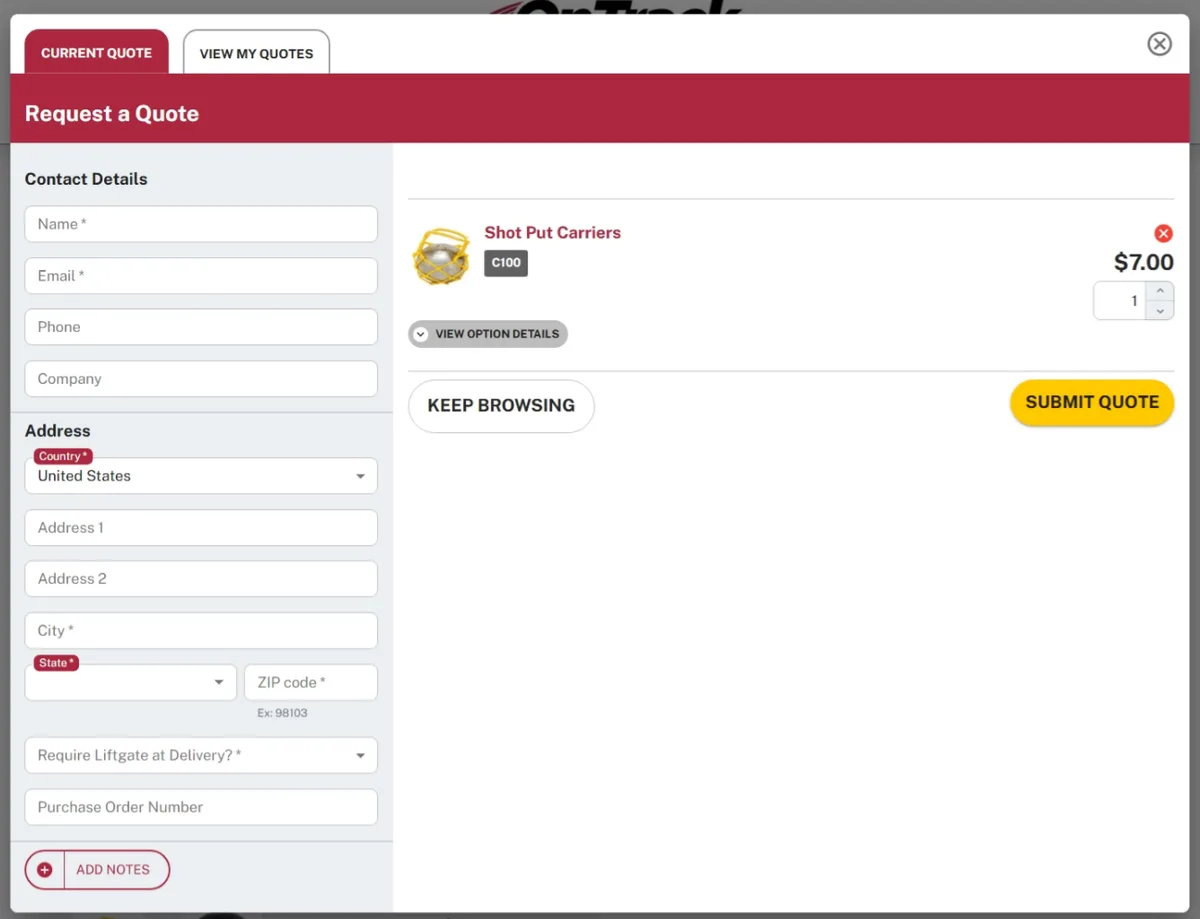
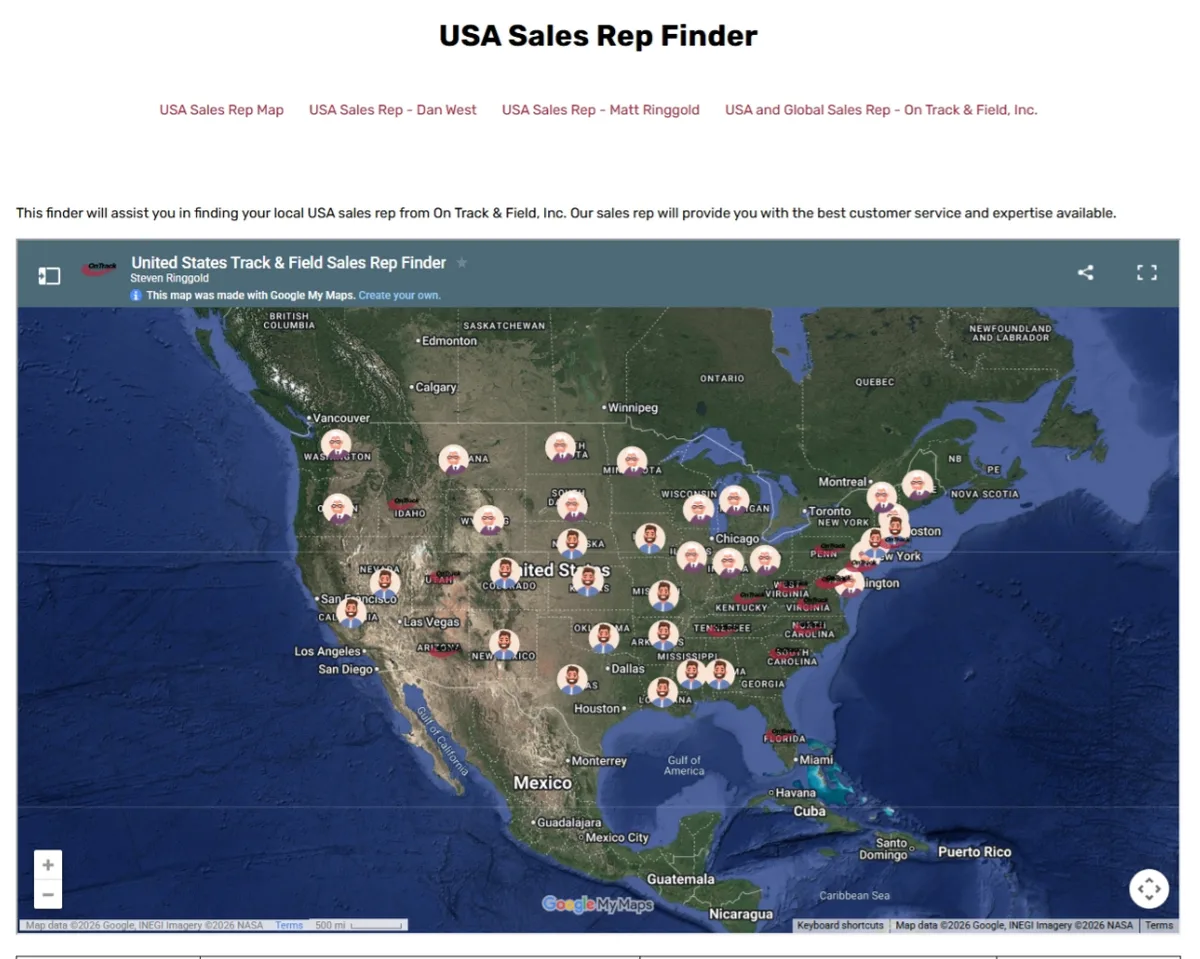
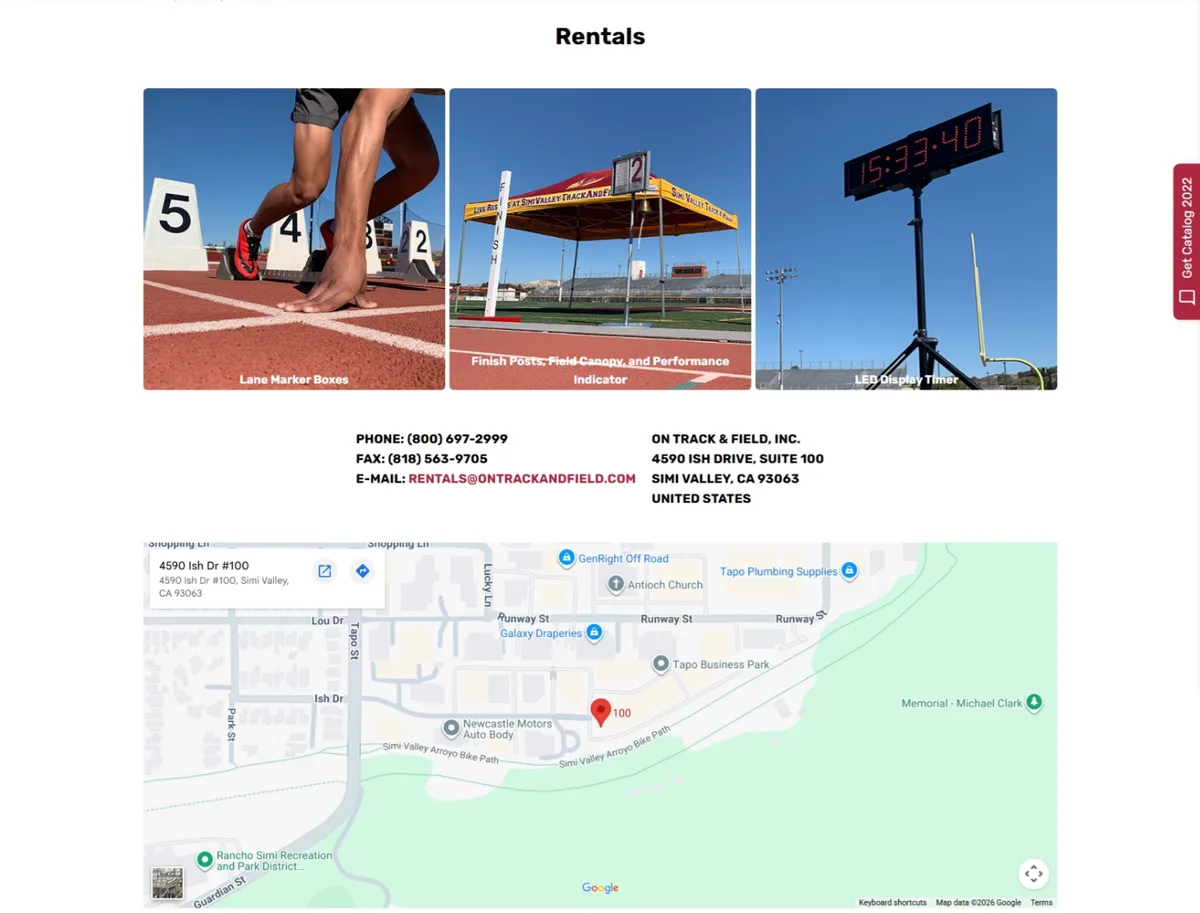
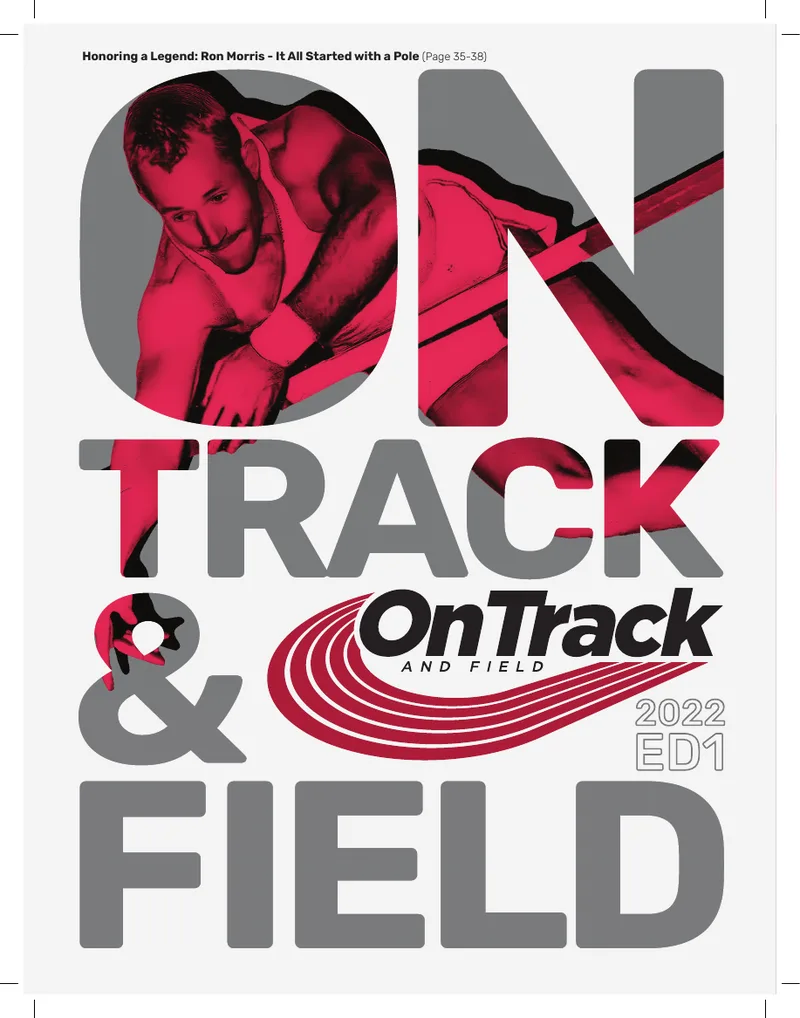
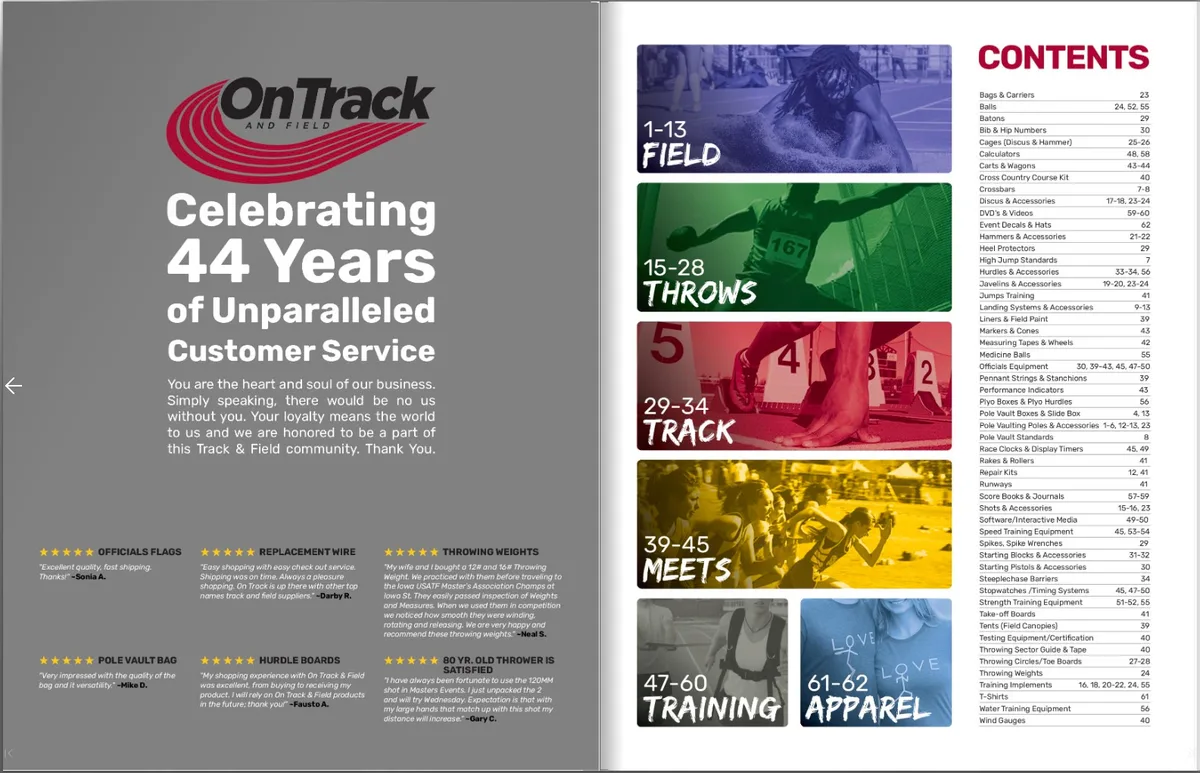
We started with search. A mid-2020 SEO program lifted the site before the rebuild: by July 2020 the store ranked 9th on Google for “on track” (up from 35th), with more than 80 keywords in the top 20. From December 2020 we rebuilt ontrackandfield.com as a full online store, carrying over the catalog ourselves — hundreds of products, every number and description checked — so nothing customers relied on was lost. We chose a cloud point-of-sale system priced for a small retailer, set it up as the cash register for the shoe storefront, and connected it to the store so the shop floor and the website sell from one inventory. Products got barcode labels for quick scanning, and the till and the store were linked to QuickBooks so sales flow into the books on their own. Because schools buy with purchase orders, we built a quote system into the store — add products, submit a quote, pay on net-30 terms — plus a sales-rep finder by state and a rentals page for the prop-rental side business. Around the store we produced everything a supplier sends out: the 2022 printed catalog, designed to be reused for the following years, an interactive catalog on a touchscreen kiosk in the shop, flyers and email promotions, and an email-marketing system fed from the same customer data.
What Happened
Customers now order online any hour of the day, and walk-in and online sales draw down the same stock. Bookkeeping became a quick check-and-finalize step for one staff member — roughly ten hours a week freed up, by our count. Roughly ten thousand customer records from the accounting system and the mailing lists came together in one place, ready for email campaigns.
Proof you can check: as of September 2026, a Google search for “track and field equipment store” lists ontrackandfield.com on page one alongside DICK'S Sporting Goods, BSN Sports, Gopher Sport and UCS Spirit — the only single-location shop in that list. The store itself is live at the link above.
What It Means for You
If your customers already love you and mostly order by phone, an online store lets them buy from you at midnight too — and connecting the store, the till and the books gives you back the hours you spend typing the same order twice. It is not a big-company project; for a small supplier it was one connection at a time. Our Online Store and Connect What You Already Use add-ons cover exactly this.
Rebuild · online store · design-it-yourself product
RelayBatons.com — Custom Engraved Relay Batons
The Starting Point
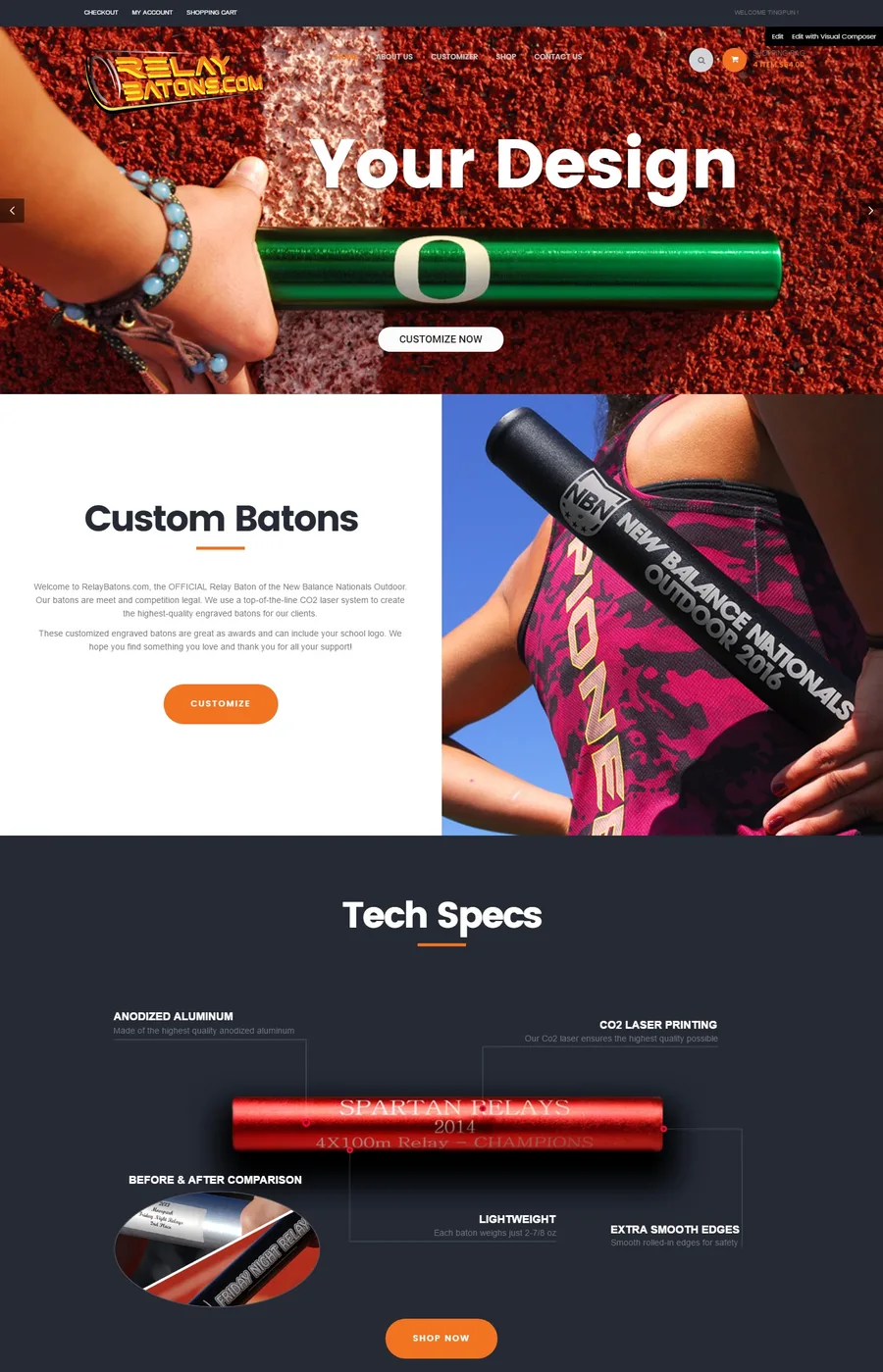
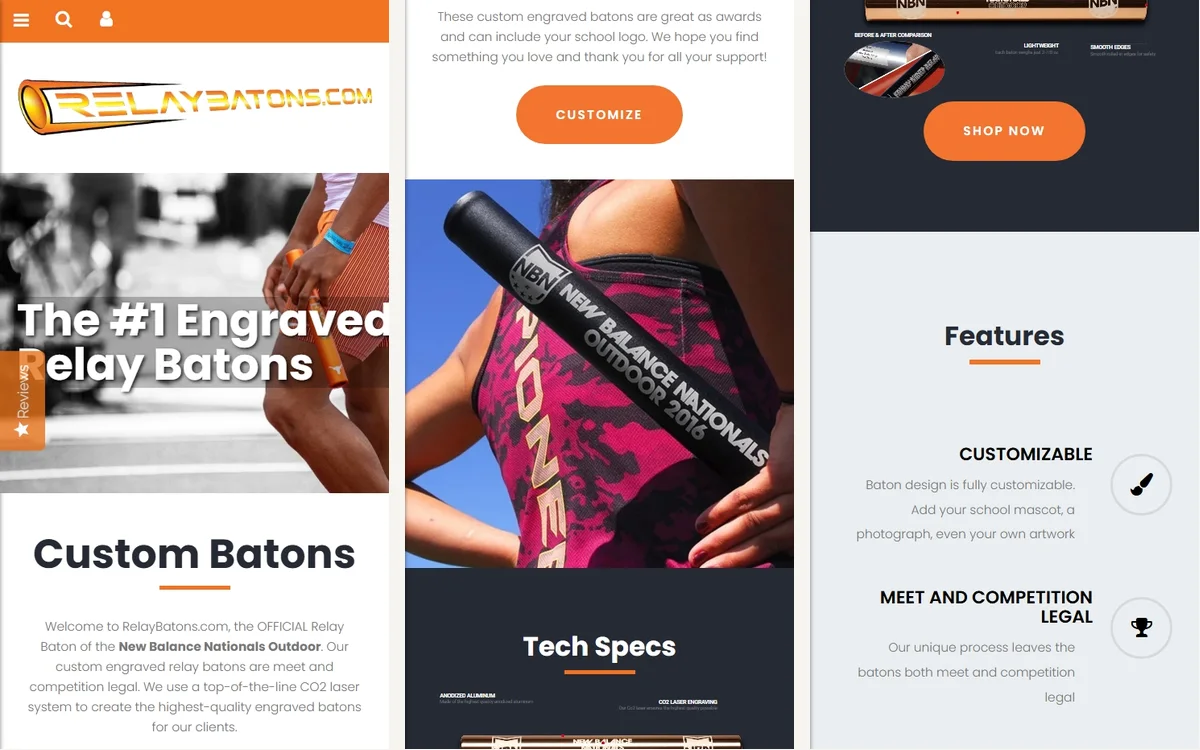
RelayBatons.com has been engraving aluminum batons for schools, clubs and track teams since 2013, and every baton is personal: the team's colors, a name, a number, a school logo. In 2017 the owner wanted customers to enjoy that personal touch on the website itself. Until then a custom order was a conversation — the customer described the design, the shop drew a PDF mockup, and the two went back and forth, about three rounds on a typical order, until it looked exactly right. The craft was there; the goal was to let customers see it for themselves before they bought.
What We Did
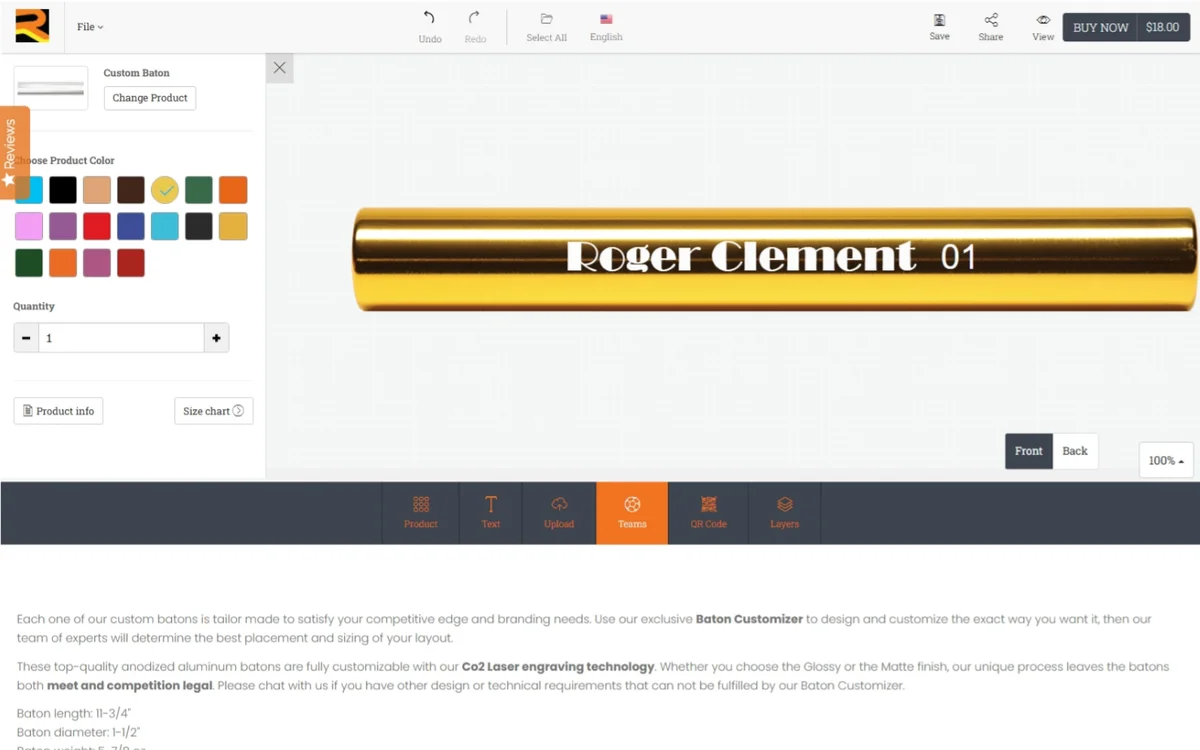
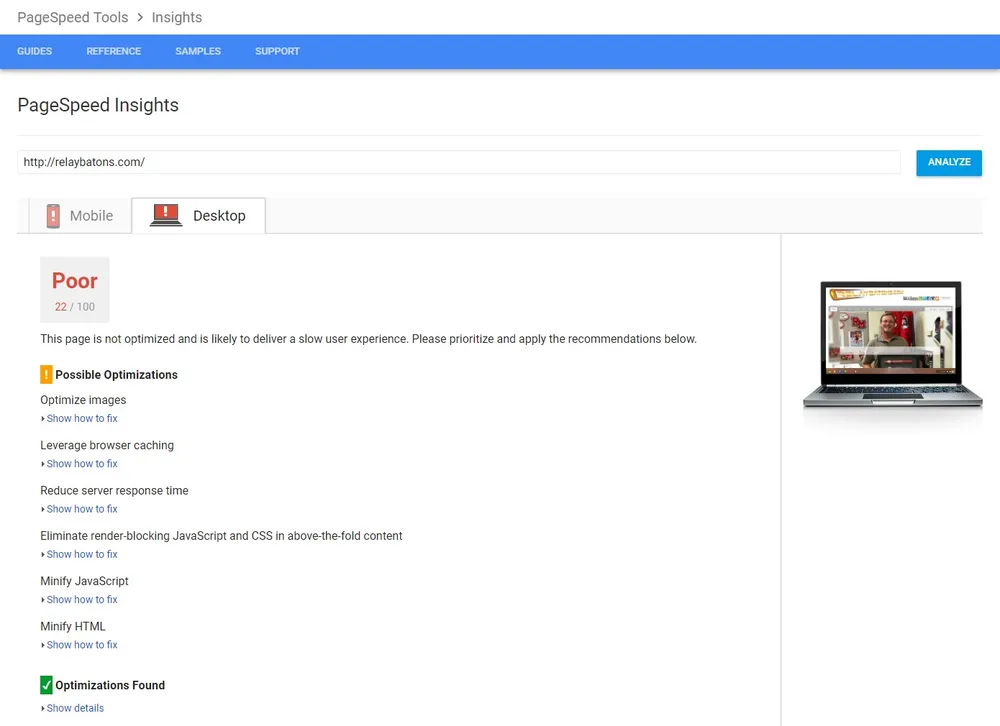
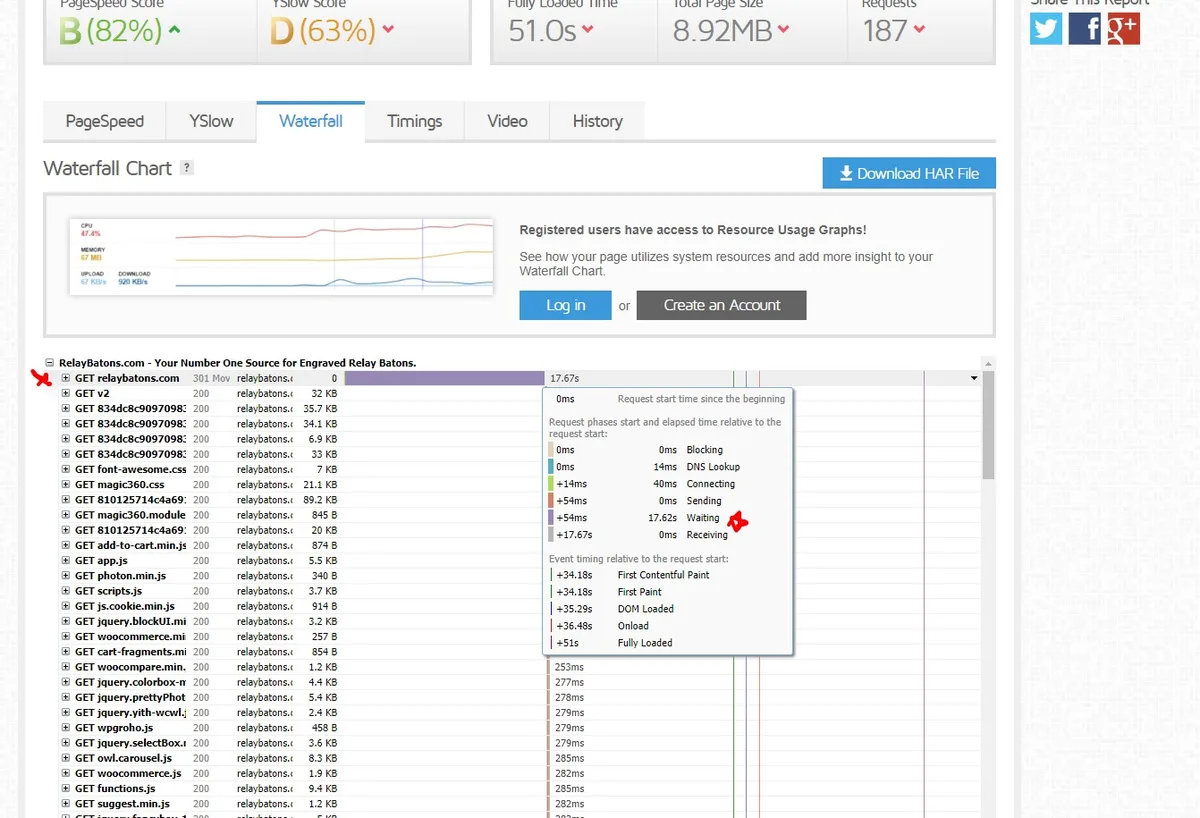
We built a brand-new site with an online store, bulk pricing and fast hosting, and at launch gave it a text-based option picker. Customers liked it, and it showed us what they really wanted: to see the colors, the matte or glossy finish and the exact placement of their text. So shortly after launch we built a live 2D/3D baton customizer on top of the store. The customer now designs on screen — color per section, glossy or matte, text lines with a choice of fonts, a clip-art library, their own logo, and for teams a whole set of batons each engraved with a different name and number. The preview is drawn to the baton's exact measurements, so what they see is the production layout; when they are happy, it goes straight into the cart and they pay. Getting that right was configuration work as much as design work: real dimensions, color and finish options, engraving areas and pricing rules all went into the tool before the preview matched the physical product. We then looked after the site — updates, uptime, speed, search and track-season changes — from 2017 to 2023. In 2018 we found a server bottleneck slowing every page, moved the site to faster hosting, and an independent audit a month later scored server behavior 10/10. In 2025 we came back to refresh features and update the parts that had aged.
What Happened
By our count as webmaster: most custom orders now go from design to payment with no proof rounds at all, because the customer approves their own design on screen. Support and mockup emails dropped noticeably, orders reached the shop as ready-to-engrave layouts, and search traffic grew year on year while the site was in our care. The owner, in his published review of the work: “I gave him very rough ideas and hopes for my ecommerce websites. Roger presented me with 3 or 4 layouts, all looked great… Roger clearly understood what I was looking for and presented me with revisions that, each time, got us closer and closer to what we ended up going with.”
Proof you can check: as of September 2026, a Google search for “custom relay batons” returns relaybatons.com in four of the top ten results — the home page, a product page, the category page and the customizer itself — ahead of Amazon. The customizer is still live at relaybatons.com/baton-customizer.
What It Means for You
If your product is made to order, letting customers design it on screen turns the approval round into part of the fun — and sends you a ready-to-make layout with every order. A design-it-yourself tool is not only for big brands: it worked for a small engraving shop, and the same idea fits signage, printing, cakes, trophies, custom furniture or anything personalized. Start with our Online Store add-on and tell us at Discovery what your customers get to choose.
Rebuild · legacy media brand
Nelson Davis Productions — “Making It!”
The Starting Point
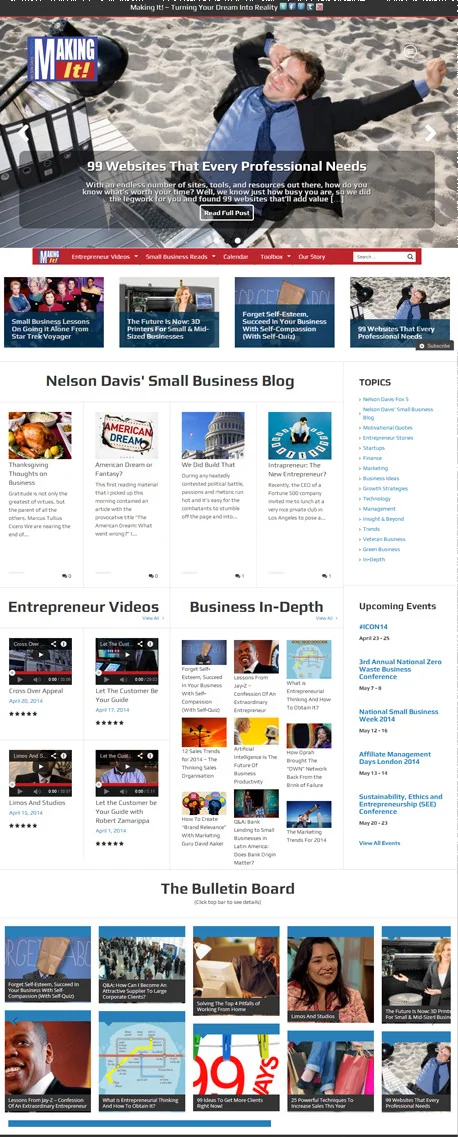
“Making It! Minority Success Stories” is a public-affairs TV series about small business that ran twenty-five years and won several Emmy Awards — with a loyal audience to match. The production company wanted its website to do more for that audience: give viewers something new to see between episodes, something to share, and a natural path from watching the show to following it online and learning about the company’s business services.
What We Did
Rebuilt the site on WordPress so the owner's team could update it themselves, refreshed the logo, and set a simple content rhythm: most episodes digitized and published, fresh small-business articles posted regularly, entrepreneur interviews hosted live, and a short podcast trial to test the audience. Working part-time in the company's Hollywood office, we sat down with the president week by week; he stayed focused on his corporate clients while the site did the outreach. After the office role ended we kept maintaining and updating the company's two sites.
What Happened
Viewership and followers rose sharply in the site's traffic reports, and the company's online presence grew with it. As audiences shifted to social media, the site's next version moved to a personal brand: Nelson Davis as the small-business expert, offering consultation and corporate video.
What It Means for You
A rebuild is still the same job today: carry over what already works, make the site something you can update yourself, and give customers a reason to come back. That is exactly what our Rebuild covers.
New brand · online store · paid ads
Bulldog Brewery LA — CoffeeDog®
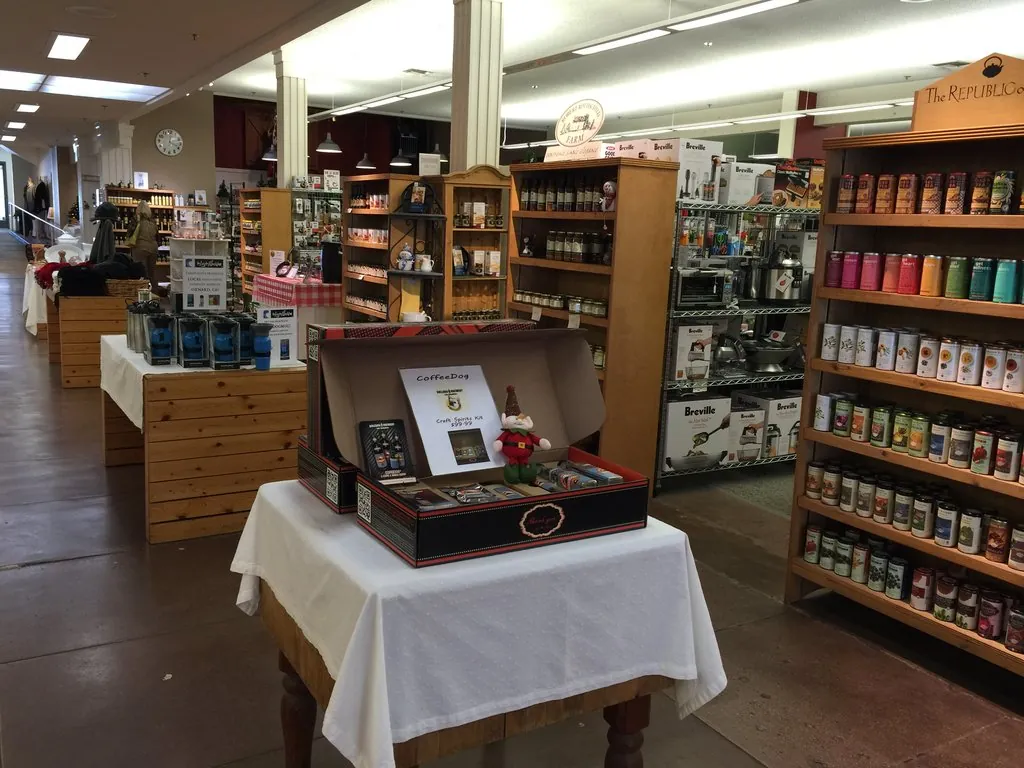
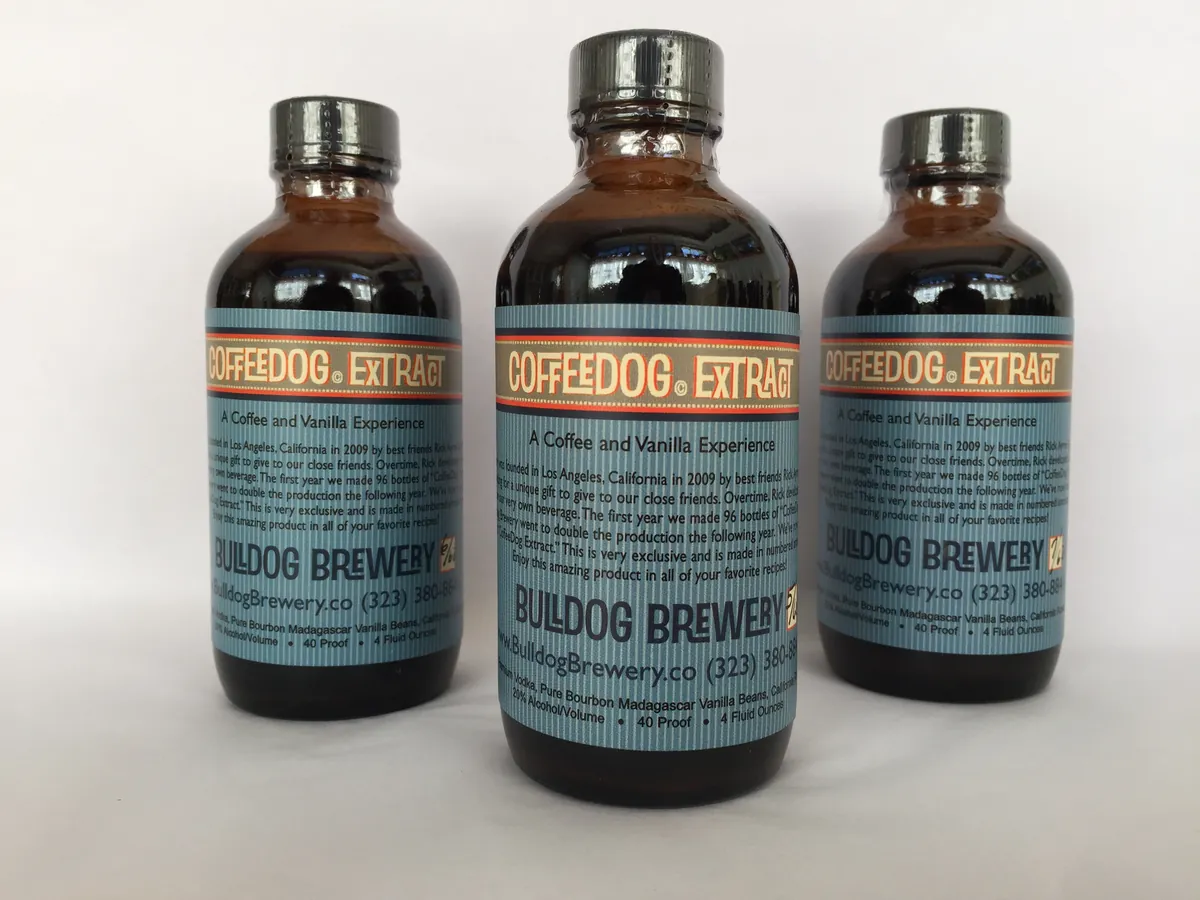
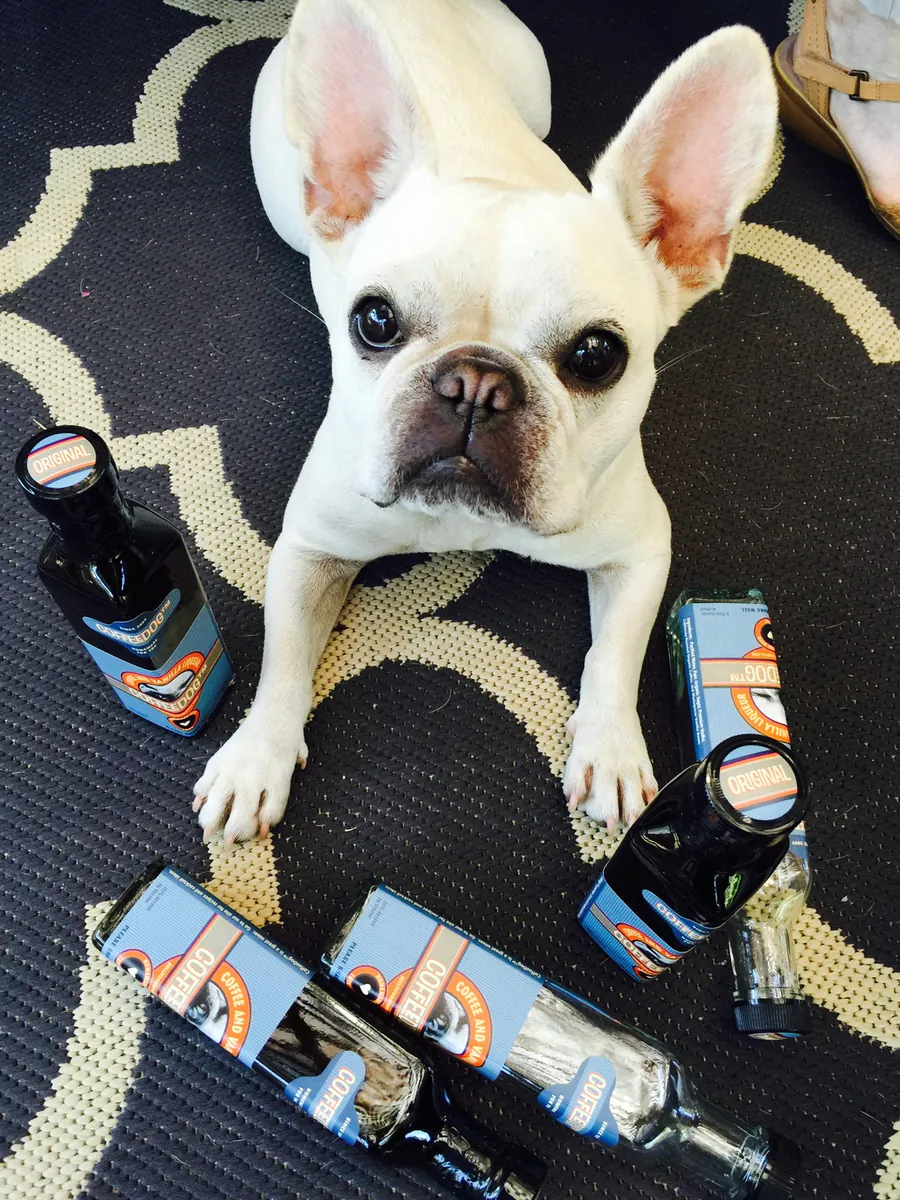
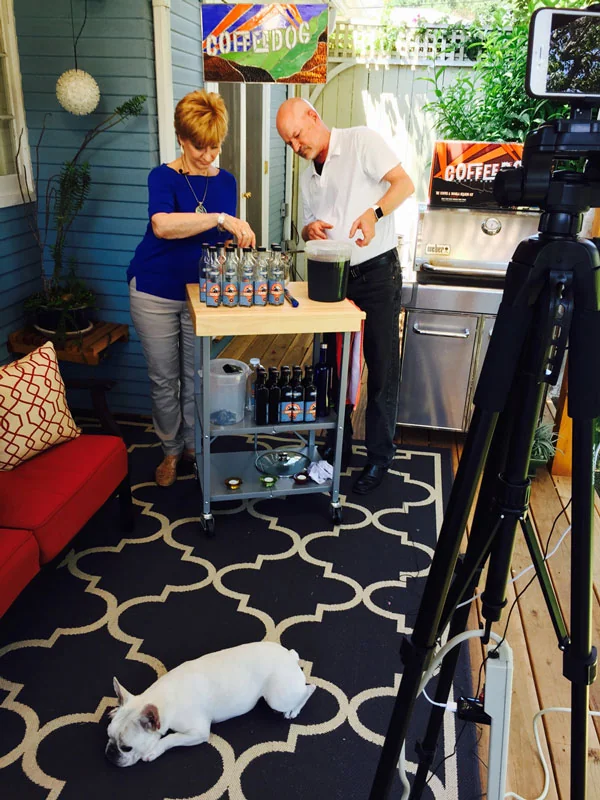
Videos load from YouTube only when you press play. Ten more recipe videos on the Bulldog Brewery channel →
The Starting Point
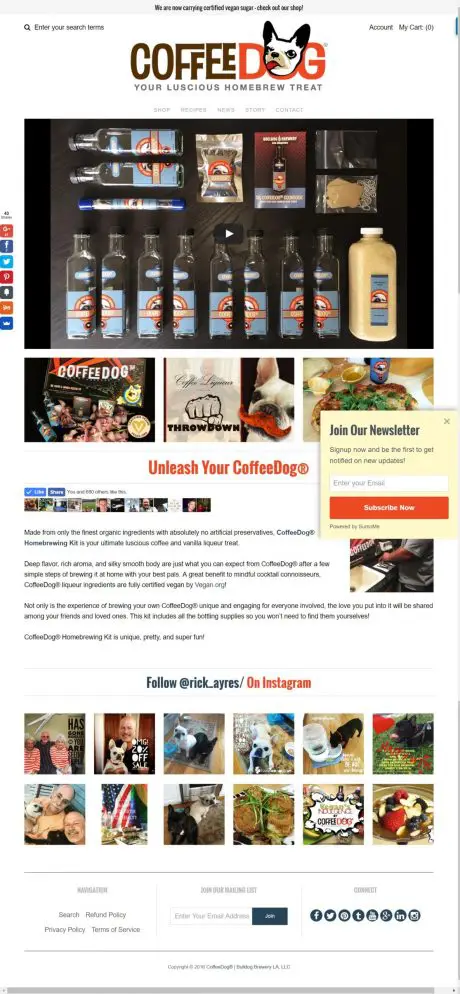
A homebrewing kit for coffee liqueur — a brand-new product category, launched by two co-founders on a lean budget. It called for a brand people understood at a glance, packaging that explained itself, and a smart way to reach a small, scattered audience without a big ad spend.
What We Did
Built the brand from scratch — bold, bright, a little playful — and carried it across the packaging, the Shopify store, printed collateral and a series of recipe video tutorials. Ran online contests and sponsored events (including a Churchill Downs race day) to attach good feelings to the name, then drove sales with targeted Google Ads, Facebook ads, local print and a discount program.
What Happened
Strong social interest, healthy first sales, and a display spot in the Rains department store. The launch also taught us something valuable: the full kit was heavy to ship and took real shelf space, so the numbers pointed to a lighter format. That insight became the follow-on product, the Vanilla & Coffee Extract Kit — smaller, cheaper to ship and easier to stock.
What It Means for You
A launch teaches you things no plan can. The website and the ads did their job — they found the audience and made the sales — and the sales data then showed the owners exactly what to build next. We bring the same candor to every project: if we see something in your numbers, we tell you early. It is written into our promises.
Content site · search traffic
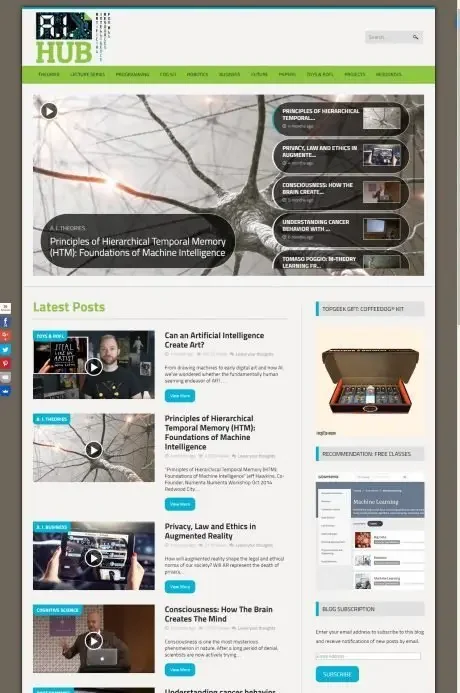
A. I. Hub — aihub.net
The Starting Point
Years before AI was a household topic, good material about it was scattered across papers and forums, and plain-language explanations were rare. The goal: a site that regular people could read, that Google would find, built and promoted by one person in spare time.
What We Did
Designed the logo, customized a WordPress theme, and after several rounds settled on a simple responsive two-column layout with a large feature slider, a green accent scheme and basic search optimization. The real work was curation: research papers and lecture videos with substance and a point of view, promoted to the right communities.
What Happened
Traffic grew alongside public interest in AI; a single post could reach around 30,000 views in a month. One young researcher's bold new theory found a wide audience because it appeared on A. I. Hub. The site ran from 2013 to 2016, and archived copies are still on the Wayback Machine.
What It Means for You
Search traffic comes from pages Google can read and content people want to share. For a local business that means a correct English and Chinese page structure, a complete Google Business Profile and a menu or service list Google can index. Those are the fundamentals every build includes.
Want Yours to Be the Next One Here?
Twenty minutes, no obligation, in English or Cantonese — or in writing over WeChat if you prefer Mandarin.